CITYTHINKING, EDDEA’s urban lab

CITYTHINKING is EDDEA’s urban research lab. It is where our way of working took shape, where much of the work we did outside Spain began, and where the tools we use today came from.
A conceptual framework of our own
CITYTHINKING is the name of the applied research with which EDDEA has approached the urban phenomenon for more than a decade. Developed in constant dialogue with academia, public administration and the private sector, it rests on a founding conviction: that the validity of an urban project depends on a holistic understanding of the system that shapes it. That continuous body of knowledge is the source of the methodological framework, the design dynamics and the parametric instruments that structure our professional practice today.
Much of this work follows an independent research agenda that goes beyond the scale of the individual commission to explore deeper questions: how a project behaves once it has been handed over, why certain patterns recur in very different geographical contexts, and what lies behind the decisions that are repeated from one commission to the next. Researching on our own initiative is a deliberate strategy to speed up learning and to tackle structural debates – residential density, the viability of affordable housing or the port–city interface – whose conclusions feed directly into design practice.

The methodological framework
Rules first, drawing second. Before proposing a form we look at what really orders that territory: what the regulations allow, how the land is divided and what it costs, what the climate does and where people already move. Once that is clear, the drawing rests on the analysis: the block is the size that works and the street goes where people actually walk.
This shift of focus, from the scale of the object to the logic of the system, turns a one-off commission into a transferable body of knowledge. The lessons drawn from one project are not repeated as typological solutions but as analytical frameworks that can be adapted to new contexts.
CITYTHINKING was born in 2009, although it draws on projects we began in 2005, and it was born by turning the profession on its head: instead of waiting for the commission, imagining the project first and then looking for someone who could make it happen. That is also where “WHY IS MORE” came from: before asking how something is done, asking why it is done. It is an uncomfortable question, because sometimes the answer is that the brief is wrong, but it is the one that avoids solving the wrong problem with great precision.

The international leap: A101 and Atlántica
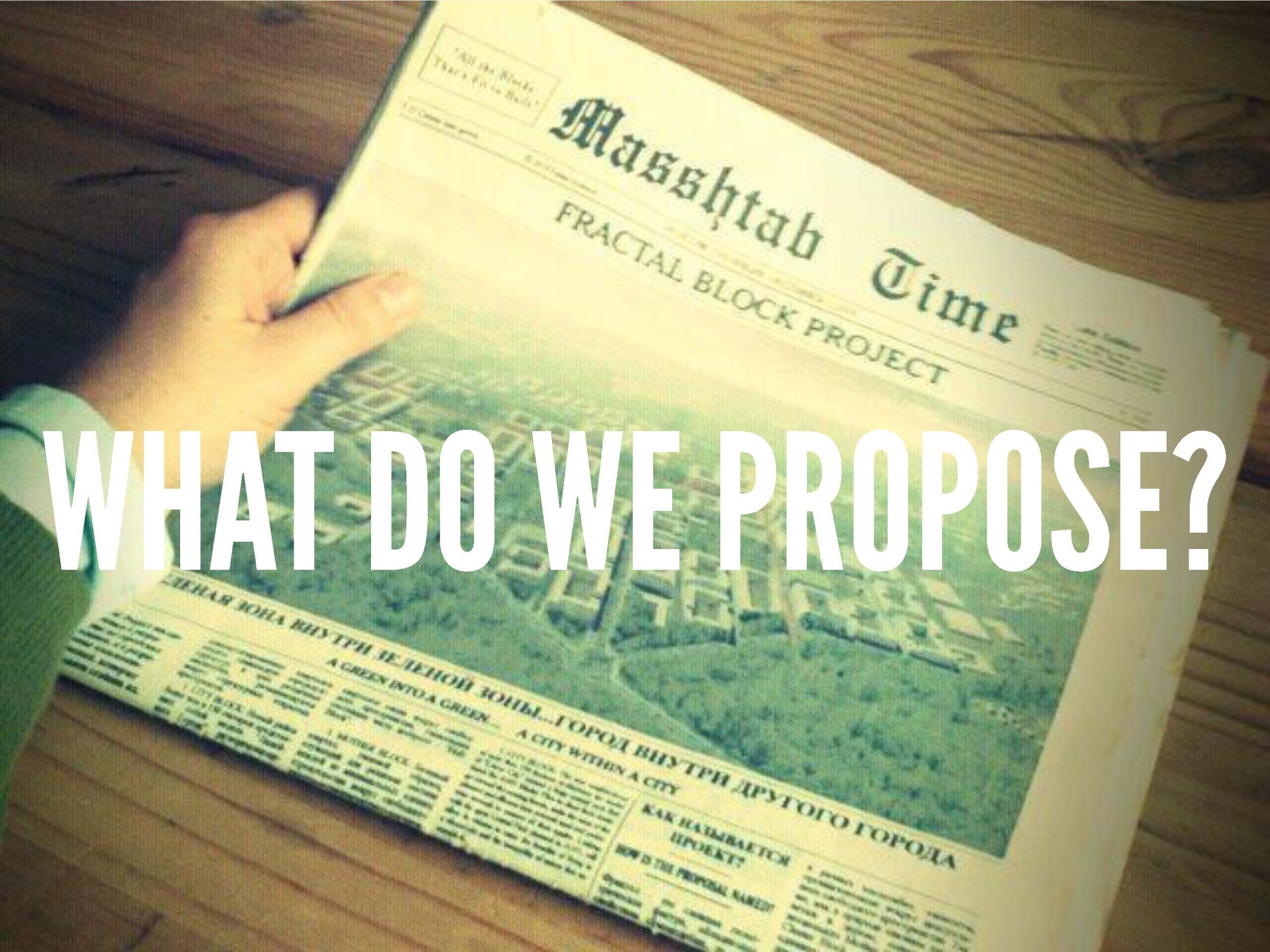
A competition took us beyond Spain. In 2010 we won the open international competition for the A101 Block City masterplan in Kommunarka, ahead of MVRDV and KCAP, and that work produced the standardised block system with which the Spanish Quarter in Moscow was later built. From there came the rest of the Russian commissions, and with them Taiwan, Morocco, Kenya and Belarus.
To support that work, in 2013 we set up Atlántica Platform together with Ghenova and Grupo Galia. It was not a parallel brand: it was the way to present ourselves in countries where nobody knew a studio from Seville, with the technical and financial capacity that commissions of that scale require. With Atlántica we designed new districts in Saint Petersburg and Moscow, and in 2016 the Minsk World masterplan: two million square metres of housing and a financial centre on a former logistics area of the Belarusian capital. Today Atlántica and CITYTHINKING are presented as what they are: the origin of what we do now.
Minsk World Masterplan, Belarus
The method, in two parts: SUE and PSP
The lab’s research gradually crystallised into two interdependent dimensions: the definition of a model of city and the development of the technical instrument capable of designing it, called SUE, Smart Urban Ecosystems, and PSP, Parametric Smart Planning, respectively.
SUE is based on the principles of ecosystemic urbanism and assesses urban quality through indicators. From that perspective, residential environments should be characterised by formal compactness, functional complexity, efficient use of resources and social cohesion. To those variables the research added two essential pragmatic criteria, replicability and economic viability, on the understanding that the global demand for affordable housing calls for solutions that can be systematised rather than isolated prototypes. The model is explicitly aligned with United Nations Sustainable Development Goal 11, which seeks inclusive, safe, resilient and sustainable cities.


PSP translated that conceptual model into an environment able to simulate and test urban scenarios – infrastructure networks, facilities, public space and building types, with their associated indicators and costs – and it was the seed of today’s CITYPLAIN® platform. The first district built with it was the Spanish Quarter in Moscow, with nearly 5,000 homes in Kommunarka, and the methodology was later presented at international forums: Parametric Smart Planning was shown in Kyiv in 2019, the same year CITYPLAIN® was presented at the Institute for Advanced Architecture of Catalonia (IAAC) in Barcelona.


From applied research to a tool of our own
The lab’s founding purpose, helping organisations replicate sustainable urban models, required going beyond individual projects and creating a tool able to compare data-based scenarios in the early stages of decision-making.
That led first to PSP and then to CITYPLAIN®, our urban design software, programmed for EDDEA by its technology partner Plain Concepts. We did not buy it off the shelf: it was built around the way we work, and that is what allows what we learn on one project to go back into the tool and serve the next one.

Research, project by project
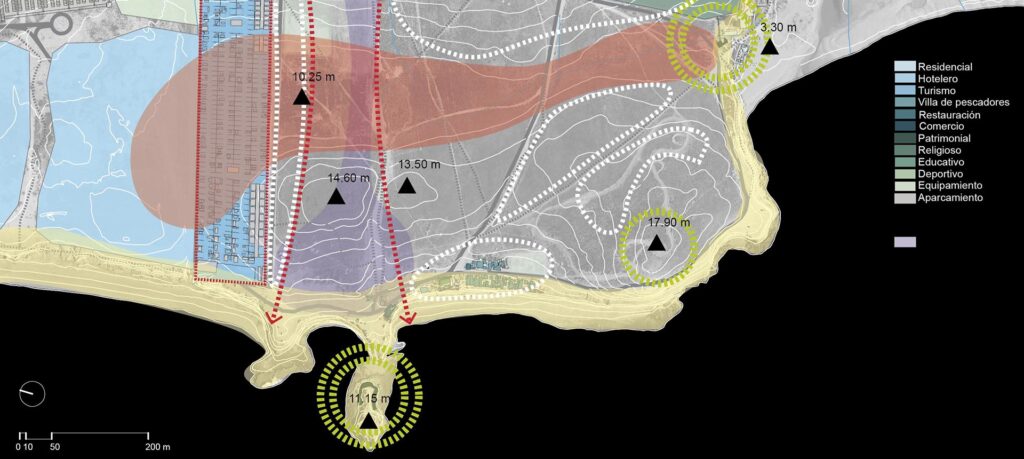
The river is the clearest case. Seville is Spain’s only inland port – the sea comes up the Guadalquivir to the city centre – and it is a condition the city barely makes use of. We began working on it in 2009 with the proposal for the Tablada marshes, studying the state of the estuary with experts and scientists, and that gave rise to the question that ordered everything else: what would change in Seville if it recovered its relationship with the river. We put it in writing again in 2018. In 2020 we won the international competition for the Port Urban District, 57 hectares of the Tablada dock, and in December that same year we joined the AIVP, the worldwide network of port cities, where we continue to work on the relationship between port and city alongside river ports in other countries. When the commission came, we had been thinking about it for eleven years.
The lab’s work remains strongly applied. The selection of projects below traces the development of that methodology, from the early research on the territory of Seville to urban developments at territorial scale abroad:
Conventos Abiertos, Seville
Tablada marshes, Seville
Strategy for the Port of Seville
Port Urban District, SevilleFábrica de Artillería, Seville
Urban Housing Platform, AndalusiaTechnobahía, Bay of Cádiz
EuroModule 60, Moscow
Leninsky District, Moscow
DNS City Masterplan, Vladivostok
Golf Park Masterplan, VladivostokTatu Waters Masterplan, NairobiShumanay District Masterplan, Karakalpakstan
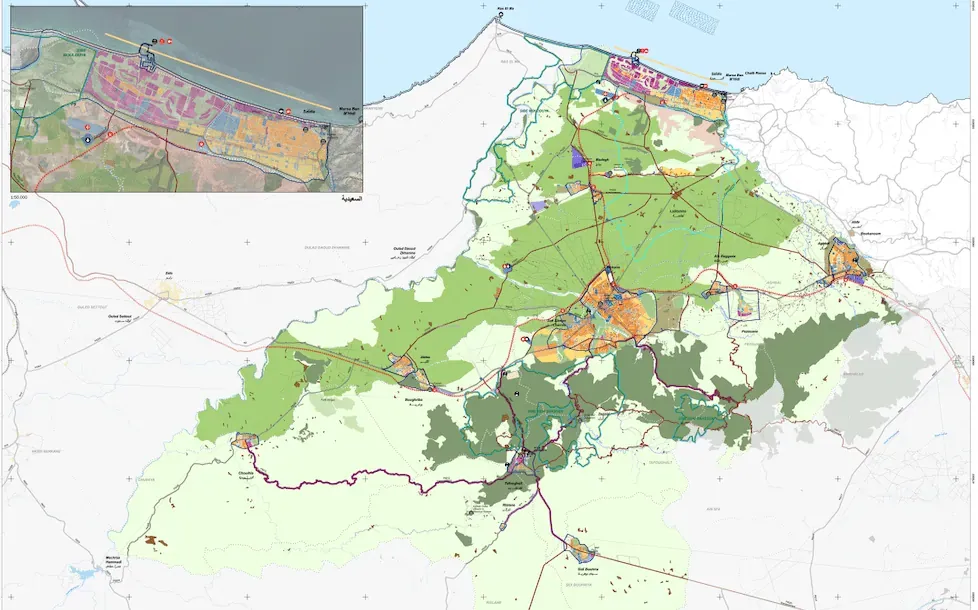
Residential neighbourhood in Trnava, SlovakiaMaster plans in Morocco
Attribution in the international press
In a number of international publications, the work carried out outside Spain has been documented under the name Citythinking. The Russian professional portal vc.ru and the PrimaMedia agency attributed the DNS City and Golf Park masterplans in Vladivostok to Citythinking. Likewise, the Slovak platform Archinfo.sk named each of the five team members individually in the Trnava competition result, while the Agence Urbaine d’Oujda credited the master plans to the team as “BET EDDEA, d’origine Espagnol”.
That variety of names reflects the natural evolution of a single team, whose legacy and continuity are fully part of EDDEA’s current structure. This page also exists for a practical reason: so that anyone following the trail of Citythinking finds, without ambiguity, where that work continues.
A documented track record
The lab’s track record shows steady consolidation: from its first press appearances in 2011 and the presentation of “WHY IS MORE” in Linz in 2015, to taking part in international panels such as the supervision and jury of the Novorossiysk competition in 2017, and the presentation of Parametric Smart Planning in Kyiv and of CITYPLAIN® at IAAC in 2019.
In December 2020, joining the AIVP, the worldwide network of port cities, was announced with a note whose title stated the lab’s commitment better than any later declaration: “Citythinking, helping organisations to replicate good cities”. The selection of CITYPLAIN® as a finalist at REBUILD and its presentation at MadridWCC, both in 2022, marked the maturity of this line of research as a tool for transfer to the industry.
One integrated trajectory
EDDEA’s current practice brings together under a single name a path of applied research and accumulated knowledge. Rather than independent structures, initiatives such as CITYTHINKING and Atlántica form the conceptual framework and theoretical basis on which the studio’s work and its ecosystem of in-house tools are built.
That continuity works as a constant feedback loop: theoretical research feeds the detailed design, while the experience gained in construction refines and improves the analysis models.
See CITYPLAIN® →