
Opinion: why Seville should give Tablada back to the marsh
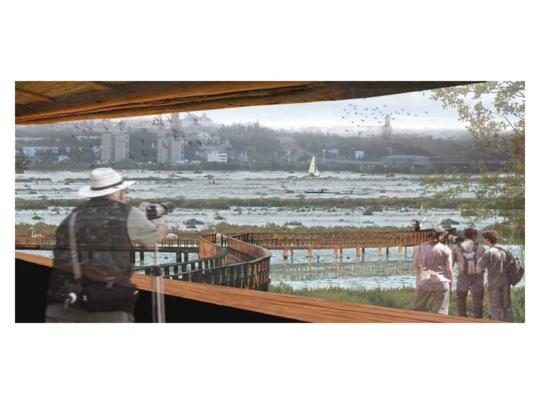
Seville is Spain’s only inland port. The sea reaches up the Guadalquivir into the heart of the city, and the tides come with it. The estuary runs from Sanlúcar de Barrameda to the dam at Alcalá del Río, and Seville lies within it, even if today it barely shows. The question we ask ourselves is this: why would bringing the Guadalquivir back to life open Seville to a new sea?
Tablada is the last large space in the city where that condition can still be read in the ground, and its future is still undecided. For decades the debate has been framed as a choice between two things: the forest park set out in the General Urban Plan (PGOU) and the proposal, which resurfaces every so often, to build housing. In 2009 we worked with the Plataforma Marismas de Tablada, an open citizens’ initiative, to put a third option on the table: reactivating Tablada as a river ecosystem. Diario de Sevilla called it at the time “the hypothetical third way”. Nine years on, it remains the only one that has never been tried.
Restore, not invent
Seville was once part of Lake Ligustinus, the sea-linked system that filled the lower Guadalquivir in antiquity. The river has changed a great deal since then, but the ground that was once under water still holds the memory of the tides. Reactivating those water dynamics is not about designing a new landscape for Tablada: it is about letting the old one return. That is the difference between an exercise in image and a restoration.
What the river gains
That work was done with scientists, and that is what gave it its argument. They showed two things at once: that the Guadalquivir reaches its estuary with its natural processes altered and needs intervention to recover them, and that it has an asset it barely uses – its position on one of the world’s great bird migration routes. A marsh at Tablada is not a nature theme park. It is useful habitat on a flyway that already passes overhead, and water in an estuary that is losing it. The river is dying on us, and we will end up piping it if we do not act.
What the city gains
Compared with the major transformation projects on the riverfront, a marsh is a light-touch intervention: it costs little to establish and little to maintain, because the water does most of the work. In return it provides flood-attenuation capacity exactly where the city needs it, and it accommodates compatible activities – birdwatching tourism, water sports, public riverside facilities – that bring social and economic returns without requiring anything to be built. In the 2009 work this took shape in proposals such as Isla Alameda: 14,600 square metres with wildlife crossings, riverside vegetation, a flood-containment zone, footpaths, a cycle lane and a stage with tiered seating.
Nor is this a matter for Seville alone. San Juan de Aznalfarache, Gelves, Coria del Río and the rest of the riverside Aljarafe share the same geography. The riverbank is one and the same.
And the flooding
The usual objection is that Tablada floods. It does, and that is precisely the point. Land that floods is a bad place to build and a good place to let the water in: a marsh holds back the flood peak rather than passing it downstream, and does so without any works that need maintaining afterwards. In a climate where rain arrives in fewer, heavier episodes, and with the sea rising inside the estuary, defending a line costs money every year, while making room for water is paid for once. What is now counted as Tablada’s problem is its greatest asset.
We already know the reading works
Understanding the port and the river as an estuarine system has not stayed on paper: it is the reading with which we won first prize in the Port Authority of Seville’s competition in 2013. What it proposes for the quays is what Tablada makes possible at another scale.
The decision on Tablada is not between nature and city. It is between keeping the land in indefinite reserve, waiting for the operation that will settle it once and for all, or starting to give it back its water and seeing what grows. The first has produced nothing in decades. The second costs little, can be done in phases and closes no doors.
