Quarto neighbourhood, Seville
A compact neighbourhood that stitches Seville and Dos Hermanas together through its heritage
How can the metropolitan city grow over a historic country estate without erasing the memory of the place?
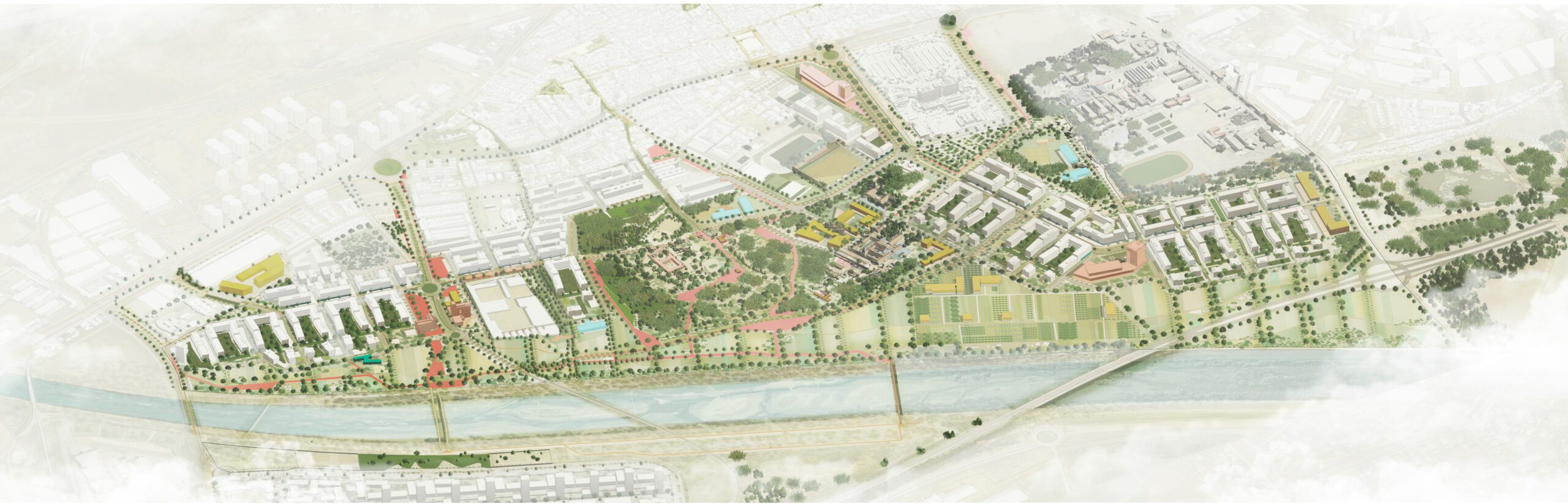
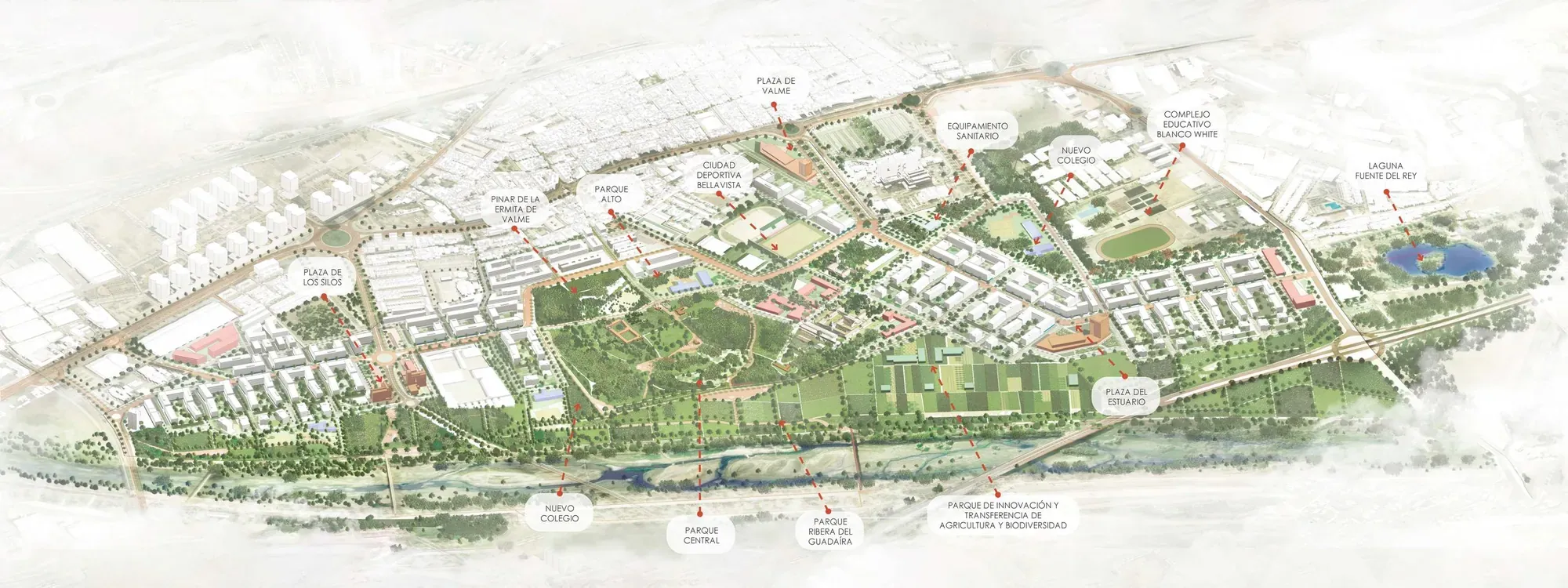
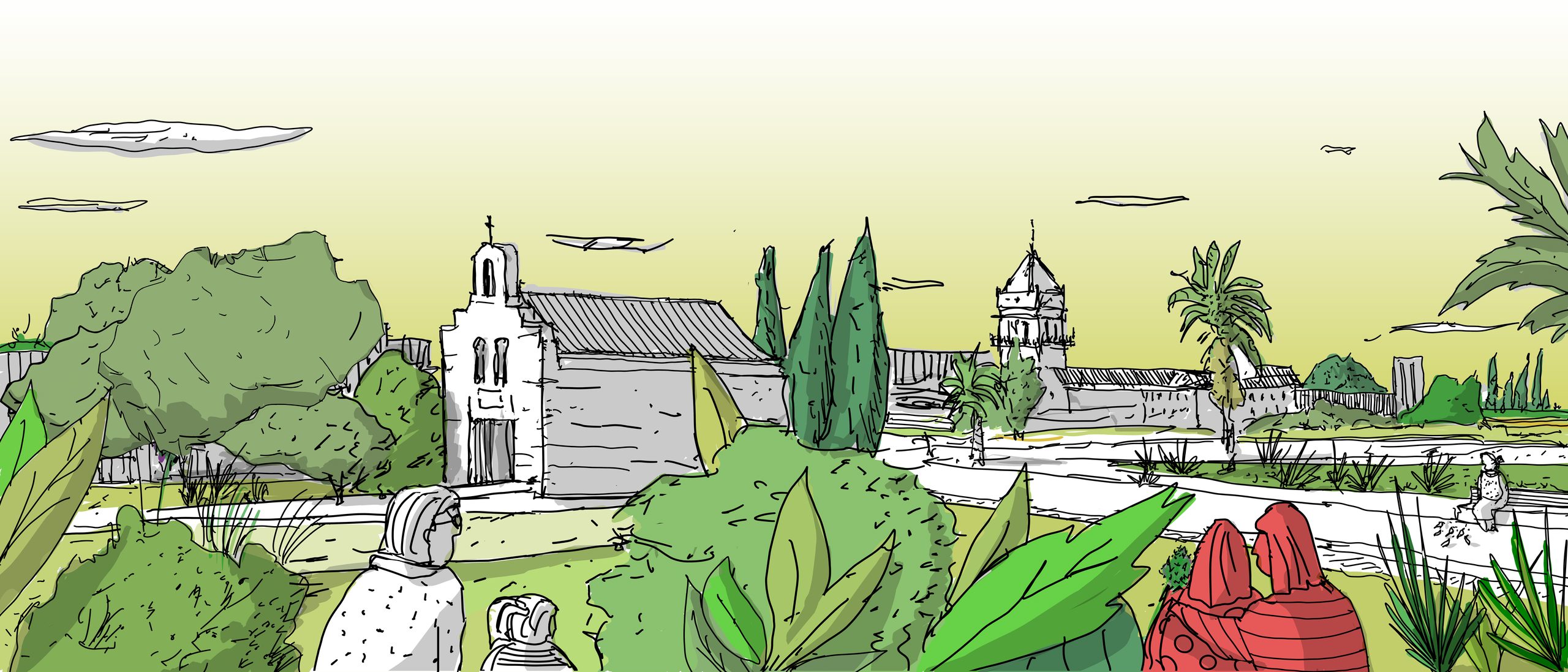
The layout starts from what is already there—the Almohad tower, the hermitage of Valme, the SENPA silos, the pine grove and the centuries-old tracks—and fits a compact, walkable urban grid around it. That restraint frees up 80 hectares of open space and allows more than 5,500 homes, half of them subsidised, to settle into a landscape that keeps its identity.
Between Seville and Dos Hermanas, beside the Guadaíra canal, the Cortijo de Cuarto estate spans 172 hectares of farmland, plant nurseries and heritage: a thirteenth-century Almohad tower, the hermitage of Valme, destination of a pilgrimage that draws some 200,000 people every year, and the old grain silos. On this land the Barrio de Quarto is taking shape as “Seville’s young neighbourhood”, with more than 5,500 homes, half of them subsidised.
In 2024 the EDDEA – Factor(ia) joint venture won the competition called by the Seville Provincial Council (Diputación de Sevilla). Since then it has been drafting the urban plan, the environmental assessment and the land readjustment (reparcelación) for a neighbourhood conceived as a single piece, one that grows out of its heritage and its landscape.
A young neighbourhood between Seville and Dos Hermanas
The site, divided into five sectors across two municipalities, lies in a part of the southern metropolitan area with long-standing connectivity deficits. The project takes on the task of stitching that growth together and resolving the disconnection it has inherited.
The place comes laden with memory. Alongside the tower and the hermitage stand the Cortijo Nuevo, once a school of agricultural engineering, the Valme pine grove and the large plant nurseries. That memory, together with the topography, sets the conditions for the layout before any street pattern is drawn.
Residential units and a grid designed for walking
The proposal is structured around residential units of contained size, pieces that make phased development easier and open the door to housing cooperatives. Over them lies a flexible, pedestrian-centred urban grid with a three-tier street hierarchy, which respects the existing topography and minimises the impact on heritage and natural features. That restraint yields a compact city model that reduces the built footprint and preserves 80 hectares of open space.
Mobility relies on direct connections to the future southern section of Seville Metro Line 3 and on a network of cycle lanes running through the whole sector, so that every point in the neighbourhood lies less than ten minutes from a public transport stop. The main roads, for their part, respect the pine grove of the Valme hermitage and recover the area’s centuries-old tracks, so that the new urban fabric carries the imprint of the place.
The green system as the neighbourhood’s infrastructure
The design of the public space gives priority to shaded walking routes, native planting and permeable surfaces, and incorporates a gender perspective to create a safe and comfortable environment. Open spaces are laid out as ecological corridors leading down to the Guadaíra canal, so that the green system works as the neighbourhood’s environmental infrastructure.
An agricultural innovation and biodiversity park of around 16 hectares reinforces the neighbourhood’s productive vocation as a hub of sustainable development for the southern metropolitan area: it brings in the Cortijo Nuevo as a research centre, sets aside zones for trials with machinery and technology and areas for research into biodiversity, health and the environment, and retains the large existing nurseries.
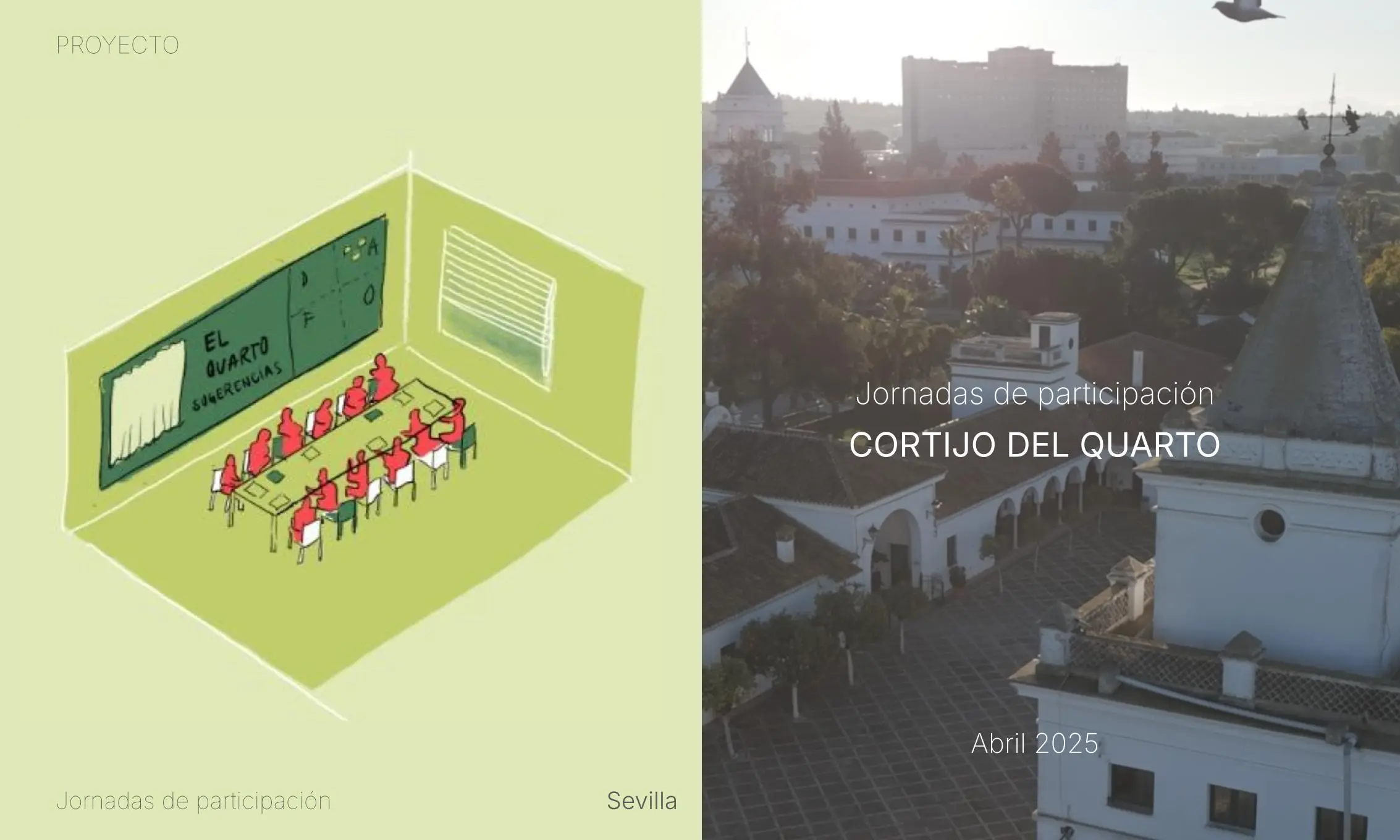
The process has included participatory workshops in which local community groups have helped to safeguard the identity of the place. A neighbourhood built from scratch thus takes the memory of its territory as its starting point, and shows that growth and conservation can belong to one and the same urban project.
The project in the press
- Seville kicks off ‘Barrio de Quarto’, with more than 5,500 homes, half of them subsidised — elDiario.es
- Barrio de Quarto in Seville unveiled, with 5,500 homes promoted by the Provincial Council — Teleprensa
- This is what Barrio de Quarto will look like: the great green lung of southern Seville — Sevilla Actualidad
- The new Quarto neighbourhood, between Seville and Dos Hermanas, is now designed — Andalucía Información